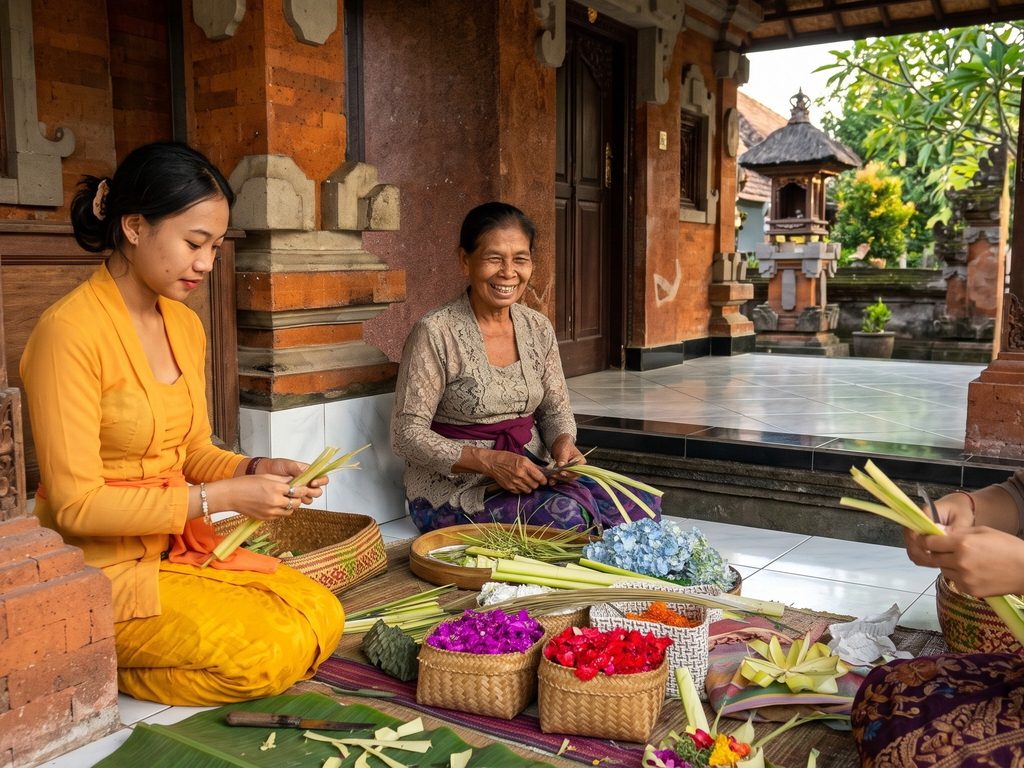
If you visit Bali early in the morning, you’ll notice small colourful offerings placed outside homes, temples, shops, and even on motorbikes. These beautiful arrangements are called Canang Sari, one of the most important daily traditions in Balinese Hindu culture.
Made from woven palm leaves, fresh flowers, pandan, and other natural elements, Canang Sari represents gratitude, devotion, and respect for the Divine.
But these offerings are more than decorations. Every colour, flower, and detail carries a deeper meaning. Here’s what you should know about Canang Sari and the tradition behind it.
What Is Canang Sari?
Canang Sari is a daily offering made by Balinese Hindus as an expression of gratitude to Ida Sang Hyang Widhi Wasa, the Supreme God.
The name comes from two Balinese words:
- Canang: The small woven palm-leaf tray.
- Sari: Meaning essence or the purest part of something.
Together, Canang Sari represents an offering of one’s gratitude, sincerity, and devotion.
The practice reflects Tri Hita Karana, a Balinese philosophy that emphasizes harmony between people, nature, and the Divine.
The Main Elements of Canang Sari and Their Meaning
Each Canang Sari is carefully prepared using several traditional elements.
| Element | What It Is | Symbolism |
| Ceper | Woven tray made from young coconut leaves | Mother Earth and stability |
| Porosan | Betel leaf, betel nut, and lime | The Trimurti: Brahma, Vishnu, and Shiva |
| Bunga | Colourful flower petals | Sincerity and devotion |
| Kembang Rampai | Shredded pandan and fragrant flowers | Purity and a peaceful mind |
| Dupa | Burning incense | Carrying prayers and offerings to the Divine |
1. Ceper: The Woven Tray
The ceper is the foundation of Canang Sari. It is traditionally woven from young coconut leaves or palm leaves into a small square or rectangular tray.
It represents Pertiwi, or Mother Earth, providing a foundation for the other elements of the offering.
2. Porosan: The Core of the Offering
Porosan is made from three ingredients: betel leaf (sirih), betel nut (pinang), and lime (kapur).
These three elements symbolize the Hindu Trimurti:
- Brahma: The Creator.
- Vishnu: The Preserver.
- Shiva: The Transformer.
Together, they represent the cycle of creation, preservation, and transformation.
3. Bunga: The Colourful Flowers
Fresh flower petals are arranged inside the tray, often in different colours and directions.
Common flowers include frangipani (jepun), marigolds, hibiscus, and cananga.
The flowers represent beauty, sincerity, and devotion during prayer.
4. Kembang Rampai: The Fragrant Touch
Kembang rampai consists of finely shredded pandan leaves and fragrant flower pieces placed over the offering.
It symbolizes purity and a peaceful mind. Its natural fragrance also adds a beautiful sensory element to the daily ritual.
Canang Sari Colours and Their Meaning
The colours used in Canang Sari are associated with Dewata Nawa Sanga, the nine directional deities in Balinese Hindu tradition.
| Direction | Flower Colour | Deity | Meaning |
| East | White | Iswara | Purity and new beginnings |
| South | Red | Brahma | Energy and creation |
| West | Yellow | Mahadewa | Wisdom and prosperity |
| North | Blue or green | Vishnu | Protection and preservation |
| Centre | Mixed colours | Shiva | Unity and balance |
The arrangement of flowers reflects the spiritual significance of the directions and the balance of the universe.
How Canang Sari Is Offered
Preparing Canang Sari is only one part of the ritual. The offering is presented through a simple prayer ceremony.
| Step | What Happens |
| 1. Preparation | The offering is carefully arranged and carried with respect. |
| 2. Holy water | Holy water (tirta) is sprinkled over the offering. |
| 3. Incense | Incense (dupa) is lit beside the offering. |
| 4. Prayer | The person prays with hands pressed together, often holding a flower. |
| 5. Placement | The offering is placed at a shrine, doorway, shop, or other designated location. |
The ritual is an opportunity to express gratitude for health, life, protection, and balance.
Where Can You See Canang Sari in Bali?
Canang Sari is part of everyday life across Bali. You’ll commonly find offerings in several places:
- Family temples (sanggah merajan): Placed at household shrines as part of daily worship.
- Doorways and gates: Offerings are placed near entrances of homes and buildings.
- Shops, cafés, and hotels: Often found near entrances, counters, and cash registers.
- Vehicles: Small offerings may be placed on motorbikes and inside cars.
- Pavements and crossroads: Some offerings are placed at ground level as part of traditional rituals.
Why Are Canang Sari Placed on the Ground?
You might notice Canang Sari placed directly on pavements, roadsides, or crossroads.
In Balinese Hindu belief, offerings are made to honour both the divine and the spiritual forces of the physical world.
Offerings placed on shrines are associated with the deities (Dewata), while ground-level offerings can be dedicated to Bhuta Kala, representing elemental forces and spirits.
This practice reflects the importance of maintaining harmony between the spiritual and physical worlds.
Best Time to See Canang Sari in Bali
Canang Sari is offered every day, so you can experience this tradition throughout the year.
However, certain times offer a closer look at the ritual.
| Occasion | What to Expect |
| Early morning | Fresh offerings being prepared and placed around homes and businesses |
| Full Moon (Purnama) | More elaborate religious offerings and ceremonies |
| New Moon (Tilem) | Additional ceremonial activities |
| Kajeng Kliwon | Special offerings and prayers |
| Galungan and Kuningan | Festive decorations, larger offerings, and traditional penjor poles |
For a more authentic experience, take an early morning walk through a traditional Balinese village or visit a local morning market.
Tips for Respecting Canang Sari
If you’re visiting Bali, understanding a few simple etiquette rules will help you respect this important tradition.
- Avoid stepping on offerings: Walk around them whenever possible.
- Don’t touch or move them: Even if they are placed near a doorway.
- Watch your step: Offerings are sometimes difficult to see on busy pavements.
- Respect people praying: Give them space and avoid interrupting their rituals.
- Ask before taking portraits: Photographing offerings is generally fine, but ask permission before photographing people.
- Dress appropriately: Wear modest clothing when visiting temples and sacred areas.
If you accidentally step on an offering, don’t panic. A quiet apology and a little more awareness are enough.
Canang Sari Etiquette Checklist
- Look down when entering shops and homes.
- Avoid stepping over or kicking offerings.
- Keep a respectful distance from burning incense.
- Never rearrange or remove an offering.
- Follow local guidance around temples and shrines.
Canang Sari FAQs
What is Canang Sari?
Canang Sari is a small daily offering made by Balinese Hindus. It consists of a woven palm-leaf tray filled with flowers and other traditional elements, presented as an expression of gratitude and devotion.
What does Canang Sari mean?
The word canang refers to the woven offering tray, while sari means essence. Together, the name represents offering the purest essence of one’s gratitude and devotion to God.
Can tourists step on Canang Sari?
It is best to avoid stepping on offerings. Walk around them whenever possible. If you accidentally step on one, a quiet apology is a respectful response.
Why are Canang Sari placed on the ground?
Ground-level offerings are associated with Bhuta Kala and the spiritual forces of the physical world. They are part of the Balinese practice of maintaining harmony between different elements of existence.
How often are Canang Sari made?
Canang Sari is generally prepared and offered daily, particularly in the morning. Fresh offerings replace those from the previous day.
Can visitors learn to make Canang Sari?
Yes. Some cultural centres, local communities, and hotels offer Canang Sari-making workshops where visitors can learn how to weave the tray and understand the meaning of each element.
Can I take photos of Canang Sari?
Yes. Photographing offerings is generally acceptable. Avoid touching or rearranging them, and always ask permission before photographing someone during prayer.
Final Thoughts
Canang Sari is more than a colourful arrangement of flowers. It represents gratitude, devotion, and the spiritual values that remain part of everyday life in Bali.
From the small offerings outside local shops to the elaborate arrangements at temples during festivals, each one carries a meaningful message.
Take an early morning walk through a Balinese village, observe the rituals, and appreciate the details. Sometimes, the best way to understand Bali’s culture is through the smallest traditions.