The best time to visit Bali is generally May, June, and September. These months offer plenty of dry-season sunshine, pleasant sea conditions, and relatively low humidity without the heavy crowds and peak prices of July, August, and the Christmas–New Year holidays.
Located just 8 degrees south of the equator, Bali enjoys warm tropical weather throughout the year, with average daytime highs ranging from 29°C to 32°C (84°F to 90°F). However, rainfall, humidity, tourist numbers, and flight prices vary depending on the month.
Whether you are planning beach days, a relaxing villa holiday, outdoor adventures, or a budget-friendly escape, understanding Bali’s seasons can help you choose the right time for your trip.
When Is the Best Time to Visit Bali?
The ideal time to visit Bali depends on your travel priorities, budget, and preferred activities.
Here is a quick overview:
- Best overall: May, June, and September – sunny weather, manageable crowds, and reasonable prices.
- Cheapest months: February, March, and October – generally lower flight and accommodation costs.
- Best for surfing, diving, and volcano hikes: May to September – favourable conditions for many outdoor activities.
- Busiest and most expensive: July, August, and mid-December to early January – peak holiday periods with higher demand.
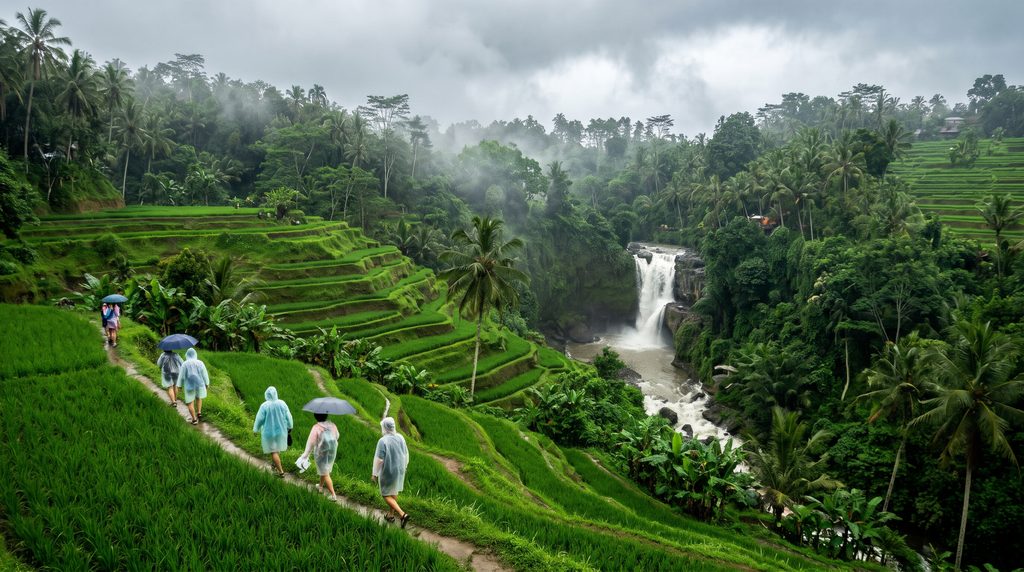
- Best for waterfalls, green rice terraces, and spa retreats: November to March – lush landscapes and a quieter atmosphere.
What Are Bali’s Two Seasons?
Bali has two main seasons: the dry season from April to October and the wet season from November to March. Each offers a different experience, from sunny beach days to tropical rain showers and vibrant green landscapes.
1. Dry Season (April–October)
The dry season is generally considered the most popular time to visit Bali, especially for travellers who want to spend time outdoors.
- Weather: Mostly sunny days, lower humidity, refreshing sea breezes, and limited rainfall.
- Best for: Beach visits, surfing, diving, and outdoor adventures. Popular destinations include Seminyak, Kuta, Canggu, and Uluwatu. It is also a favourable period for hiking Mount Batur and Mount Agung.
- Crowds and prices: Visitor numbers increase significantly in July and August, when European summer holidays overlap with Australian winter school holidays. Flights and accommodation can become considerably more expensive.
2. Wet Season (November–March)
The wet season brings higher humidity, tropical showers, and greener scenery. Although rainfall becomes more frequent, it does not necessarily mean it will rain throughout the day.
- Weather: Hot and humid, with frequent tropical showers that often arrive in the afternoon.
- Best for: Visiting waterfalls, exploring the lush rice terraces of Ubud and Sidemen, enjoying cultural attractions, and relaxing at spas or wellness retreats.
- Watch out for: Monsoon winds can bring ocean debris onto western beaches, particularly during January and February.
- Crowds and prices: Tourist numbers are generally lower, and flights and accommodation can offer better value. However, demand and prices rise around Christmas and New Year.
Dry Season vs. Wet Season in Bali: What Is the Difference?
Choosing between Bali’s two seasons depends on the type of holiday you have in mind. The dry season is ideal for outdoor activities and beach holidays, while the wet season offers greener scenery and potentially better accommodation deals.
| Feature | Dry Season (April–October) | Wet Season (November–March) |
| Weather | Mostly sunny, clearer skies, and lower humidity | Hot, humid, with frequent tropical showers |
| Beaches | Generally clearer water and cleaner west-coast beaches | Possible beach debris along the west coast, especially January–February |
| Landscapes | Drier hiking trails and good visibility | Lush rice terraces and fuller waterfalls |
| Crowds | Very high in July and August | Generally lower, except mid-December to early January |
| Prices | Higher rates during July and August | Potentially lower accommodation rates, with villa discounts of 30%–50% sometimes available |
| Best for | Beaches, surfing, diving, and volcano hikes | Budget trips, spa retreats, culture, and nature |
Bali Weather Month by Month
Bali’s weather changes throughout the year. August is typically the driest month, while January is among the wettest.
The following guide gives you an overview of average daytime temperatures, seasonal conditions, crowds, and typical travel costs.
| Month | Season | Average High | Rainfall & Conditions | Crowds | Flight & Hotel Rates |
| January | Peak wet season | 31°C (88°F) | Frequent tropical showers and high humidity. Suitable for spa retreats and cultural activities. | Low after New Year | Very affordable 💰 |
| February | Wet season | 31°C (88°F) | Rain showers, lush landscapes, and warm ocean temperatures. | Low | Very affordable 💰 |
| March | Transition | 31°C (88°F) | Rainfall gradually begins to ease. Nyepi, the Day of Silence, usually falls during this month. | Low to moderate | Budget-friendly 💰 |
| April | Early dry season | 32°C (90°F) | More sunshine, less rainfall, and still-green landscapes. | Moderate | Good value 🏷️ |
| May | Sweet spot | 31°C (88°F) | Sunny days, refreshing breezes, and favourable outdoor conditions. | Moderate | Reasonable 🏷️ |
| June | Dry season | 30°C (86°F) | Clear skies, pleasant temperatures, and lower humidity. | Rising | Mid to high 📈 |
| July | Peak season | 29°C (84°F) | Cool breezes, clear skies, and dry conditions. | Very high 👥 | Peak pricing 💳 |
| August | Driest month | 29°C (84°F) | Very little rainfall and excellent beach weather. | Very high 👥 | Peak pricing 💳 |
| September | Sweet spot | 30°C (86°F) | Excellent dry-season weather and relatively low humidity. | Dropping | Great value 🏷️ |
| October | Shoulder month | 31°C (88°F) | Mostly dry, with occasional afternoon showers. | Low to moderate | Budget-friendly 💰 |
| November | Early wet season | 32°C (90°F) | Rainfall increases, humidity rises, and roads are generally quieter. | Low | Affordable 💰 |
| December | Holiday peak | 31°C (88°F) | Rainy-season conditions with festive holiday activity from mid-month. | Very high around New Year | High peak pricing 💳 |
Note: Temperatures and travel-cost descriptions are general seasonal guides. Actual weather, flight fares, and accommodation prices vary by year and booking dates.
What Is the Best Time to Visit Bali for Your Travel Style?
Not every traveller visits Bali for the same reason. Some want sunny beach days, while others prioritise affordable accommodation, outdoor adventures, or peaceful wellness retreats.
Here is how to choose the right travel period.
1. Best Overall: May, June, and September
For a balance of sunshine, manageable crowds, and reasonable travel costs, May, June, and September are excellent months to visit Bali.
These months offer typical dry-season conditions without the full demand of the July–August peak. They are suitable for beach holidays, sightseeing, outdoor dining, and exploring different parts of the island.
2. Best for Budget Travellers: February, March, and October
If keeping your travel costs low is a priority, consider visiting in February, March, or October.
Flights and hotel rates can be more affordable during these periods, and some luxury villas in Seminyak, Canggu, and Ubud may offer discounts of 30%–50%.
February and March fall within the wet season, while October is a transition month that often still offers plenty of dry weather.
3. Best for Surfing, Diving, and Volcano Hikes: May to September
The dry season is a popular period for outdoor adventures in Bali.
Clearer weather can make sunrise hikes on Mount Batur more enjoyable, while favourable sea conditions can support diving trips around Nusa Penida and Menjangan.
For surfers, the west coast is particularly popular during this period. Well-known breaks include Uluwatu, Padang Padang, and Canggu, where offshore trade winds can create favourable surf conditions.
4. Best for Nature, Waterfalls, and Wellness: November to March
The rainy season transforms Bali’s natural landscapes. Rice terraces in Ubud and Sidemen become greener, and waterfalls can become more powerful after periods of rainfall.
It is also a good time to enjoy indoor experiences, including traditional spa treatments, yoga sessions, wellness retreats, and cultural activities.
For travellers who prefer a quieter atmosphere and potentially lower accommodation costs, November to March can be an appealing option.
Key Takeaways for Planning Your Trip
Before booking your flights and accommodation, consider these three important travel periods:
- The sweet spot (May, June, and September): A good balance of dry-season sunshine, pleasant breezes, and manageable crowds without the highest peak-season prices.
- Peak season (July, August, and mid-December to early January): Ideal for travellers who want a lively atmosphere and plenty of sunshine, but expect heavier traffic, busy beach clubs, and higher prices. Book popular accommodation and activities early.
- The rainy-season trade-off (November to March): A potentially better-value period for budget travellers and nature lovers. Tropical showers are often concentrated in the afternoon, while green landscapes and flowing waterfalls make the island especially beautiful.
Best Time to Visit Bali FAQs
What is the best month to visit Bali?
May, June, and September are among the best months to visit Bali. They generally offer dry-season sunshine, pleasant sea conditions, and lower humidity without the busiest crowds and highest prices of July, August, and the Christmas–New Year period.
What is the cheapest time to visit Bali?
February, March, and October are generally good months for budget-conscious travellers. Flights and accommodation can be more affordable, and some villas in Seminyak, Canggu, and Ubud may offer discounts of 30%–50%. Avoid mid-December to early January if you want to escape peak holiday prices.
Does it rain all day during Bali’s rainy season?
Not necessarily. Bali’s wet season, which usually runs from November to March, often brings short but intense tropical showers rather than continuous rain throughout the day. Mornings can still be clear, giving visitors time to explore before afternoon showers arrive.
What is the driest month in Bali?
August is typically the driest month in Bali. It usually brings clear skies, refreshing breezes, and excellent conditions for beach activities. However, it is also one of the busiest and most expensive months to visit.
When is Bali the most crowded?
Bali is generally busiest in July and August, when European summer holidays overlap with Australian winter school breaks. Another busy period runs from mid-December to early January. During these times, expect heavier traffic, busy beach clubs, and higher accommodation prices.
Is January a good time to visit Bali?
January can be a good option for budget travellers, spa retreats, and cultural experiences. It falls within the wet season, so expect frequent showers and high humidity. Monsoon winds can also bring debris to west-coast beaches. However, visitor numbers and accommodation prices are often lower after the New Year holiday period.
When is the best time for surfing, diving, and hiking Mount Batur?
May to September is generally a favourable period for these activities. Clearer skies can improve conditions for Mount Batur sunrise hikes, while suitable sea conditions can support diving around Nusa Penida and Menjangan. Offshore trade winds also help create popular surf conditions at Uluwatu, Padang Padang, and Canggu.
What is Nyepi, and how does it affect travel to Bali?
Nyepi is the Balinese Hindu Day of Silence, usually observed in March. For 24 hours, the island observes strict restrictions on outdoor activities. The airport closes, roads are quiet, and visitors are expected to remain within their accommodation. Make sure your arrival and departure dates do not conflict with Nyepi.
Final Thoughts
There is no single perfect time to visit Bali. The right month depends on your budget, preferred activities, and the kind of holiday you want to experience.
- The sweet spot (May, June, and September): Ideal for a balance of dry weather, pleasant sea conditions, and manageable crowds without the highest summer holiday prices.
- Peak season (July, August, and mid-December to early January): Best for travellers who enjoy sunny beach days, lively beach clubs, and a vibrant nightlife scene. Book accommodation, drivers, and popular activities well in advance.
- The rainy season (November to March): A good option for budget travellers, spa lovers, and nature enthusiasts. Enjoy lush rice terraces, flowing waterfalls, and potentially lower accommodation rates while planning around tropical showers.
Whatever month you choose, Bali has something to offer throughout the year. Plan around the season that suits your travel style, and you can enjoy a memorable island holiday in any part of the calendar.