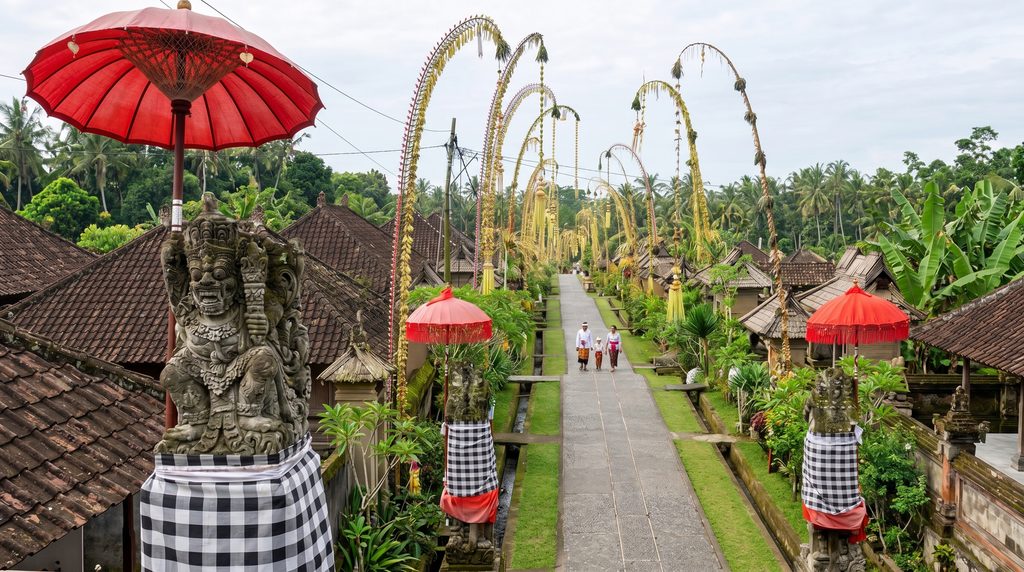
Beyond Bali’s beaches and resorts, the island is home to traditional villages where ancient customs, local crafts, architecture, agriculture, and spiritual traditions are still part of everyday life.
From Bali Aga villages with distinctive customary laws to artisan communities famous for silver, woodcarving, and textiles, these villages offer a deeper look at Bali’s living heritage.
Quick Guide to Bali’s Unique Villages
| Village | Known For | Best For |
| Penglipuran | Traditional architecture & cleanliness | First-time visitors |
| Trunyan | Ancient burial traditions | Cultural exploration |
| Tenganan | Geringsing double ikat | Textile lovers |
| Sidemen | Rice terraces & weaving | Slow travel |
| Celuk | Silver and gold crafts | Shopping & workshops |
| Mas | Traditional woodcarving | Art lovers |
| Batubulan | Barong dance & stone carving | Performing arts |
| Tegallalang | Rice terraces & Subak | Photography |
| Sembiran | Ancient Bali Aga heritage | History & archaeology |
| Julah | Ancient inscriptions & traditions | History |
| Sidatapa | Traditional architecture & bamboo | Architecture |
| Taro | Sacred white cattle | Spiritual & nature experiences |
1. Penglipuran Village
Location: Bangli
Best for: Families, photography and first-time visitors
Penglipuran is one of Bali’s best-known traditional villages, recognized for its clean environment, traditional architecture, and carefully maintained central pathway.
The village is designed around the Balinese philosophy of Tri Hita Karana, emphasizing harmony between people, nature, and the divine.
Highlights
- Traditional angkul-angkul gates
- Vehicle-free main pathway
- Bamboo forest
- Traditional family compounds
- Local drink Loloh Cemcem
Tip: Arrive early in the morning to enjoy the village before the busiest visitor period.
2. Trunyan Village
Location: Eastern shore of Lake Batur, Bangli
Best for: Cultural and historical experiences
Trunyan is one of Bali’s best-known Bali Aga communities. It is particularly famous for its traditional burial practices, which differ from the cremation customs found across much of Bali.
Bodies are traditionally placed beneath the Taru Menyan tree in the village cemetery.
Highlights
- Bali Aga culture
- Traditional burial customs
- Lake Batur scenery
- Ancient shrines and village traditions
Visitors should behave respectfully and ask before taking photographs, particularly around sacred areas.
3. Tenganan Pegringsingan
Location: Karangasem
Best for: Textiles and Bali Aga culture
Tenganan Pegringsingan is a traditional walled village known for its distinctive Bali Aga culture, customary laws, and traditional crafts.
Its most famous product is Geringsing, a rare double-ikat textile that requires highly skilled and time-consuming production.
Highlights
- Geringsing weaving
- Traditional village architecture
- Awig-awig customary laws
- Makare-kare pandan ritual
- Traditional crafts
Tenganan can easily be combined with a trip to Candidasa or other East Bali destinations.
4. Sidemen Village
Location: Karangasem
Best for: Slow travel, trekking and rural landscapes
Sidemen offers a quieter side of Bali, with rice terraces, rivers, traditional villages, and views toward Mount Agung.
It is also known for traditional textile production, including Endek and Songket weaving.
Things to Do
- Walk through rice terraces
- Visit local weaving workshops
- Explore village paths
- Stay in a countryside accommodation
- Enjoy sunrise and mountain views
For a more relaxed experience, consider staying overnight rather than visiting only as a day trip.
5. Celuk Village
Location: Gianyar
Best for: Silver and gold craftsmanship
Celuk is one of Bali’s most famous artisan villages, particularly known for silver and gold jewelry.
Visitors can explore workshops, see traditional techniques, and in some places join jewelry-making classes.
Highlights
- Silver jewelry
- Goldsmithing
- Filigree craftsmanship
- Jewelry workshops
- Handmade souvenirs
Buying directly from local workshops can be a good way to support traditional artisans.
6. Mas Village
Location: Gianyar
Best for: Balinese art and woodcarving
Mas is traditionally associated with Balinese woodcarving. Local artisans create sculptures inspired by Hindu mythology, traditional figures, and Balinese culture.
Highlights
- Woodcarving workshops
- Traditional sculptures
- Hindu-inspired artwork
- Local artisan studios
Mas can easily be combined with Celuk, Batubulan, and Ubud.
7. Batubulan Village
Location: Gianyar
Best for: Dance and traditional performing arts
Batubulan is widely associated with Barong and Kris dance performances, as well as traditional stone carving.
The Barong performance represents the struggle between good and evil and remains one of Bali’s most recognizable cultural performances.
Highlights
- Barong dance
- Kris dance
- Stone carving
- Temple and guardian sculptures
Its location makes Batubulan convenient to visit as part of a southern Bali or Ubud cultural route.
8. Tegallalang Village
Location: North of Ubud
Best for: Rice terraces, photography and countryside experiences
Tegallalang is famous for its dramatic rice terraces, traditional farming landscapes, craft shops, and cafés overlooking the valley.
The area demonstrates the importance of Subak, Bali’s traditional cooperative irrigation system.
Highlights
- Rice terraces
- Subak irrigation landscapes
- Local crafts
- Countryside walks
- Scenic cafés
For a more immersive experience, explore beyond the main tourist viewpoints and walk through the surrounding villages.
9. Sembiran Village
Location: Tejakula, North Bali
Best for: History and archaeology
Sembiran is a lesser-visited Bali Aga village in northern Bali. It is associated with ancient settlements and archaeological discoveries, making it particularly interesting for travelers interested in Bali’s early history.
Highlights
- Bali Aga heritage
- Ancient stone structures
- Traditional village life
- Quiet northern Bali landscapes
Sembiran is best visited with a local guide who can explain the village’s history and customs.
10. Julah Village
Location: Tejakula, North Bali
Best for: History and traditional culture
Located near Sembiran, Julah is another historic northern Bali village with ancient inscriptions and long-standing community traditions.
It provides a quieter cultural experience away from the island’s major tourist centers.
Tip: Visit Julah and Sembiran together as part of a North Bali heritage trip.
11. Sidatapa Village
Location: Buleleng
Best for: Traditional architecture and bamboo crafts
Sidatapa is a Bali Aga village known for its distinctive traditional architecture and bamboo craftsmanship.
Visitors can explore village houses, observe local crafts, and learn about the community’s heritage.
Highlights
- Traditional Bali Aga architecture
- Bamboo crafts
- Village walks
- Highland scenery
Sidatapa can be combined with other North Bali attractions, including Lovina and nearby traditional villages.
12. Taro Village
Location: Gianyar
Best for: Spiritual heritage and nature
Taro is one of Bali’s historic villages and is closely associated with local spiritual traditions and the Lembu Putih, or sacred white cattle.
Visitors can explore the countryside, bamboo forests, temples, and conservation areas.
Highlights
- Sacred white cattle
- Pura Gunung Raung
- Rural walking trails
- Bamboo forests
- Local spiritual traditions
Best Village Routes in Bali
| Route | Villages | Suggested Time |
| Ubud Culture Route | Batubulan → Celuk → Mas → Tegallalang → Taro | 1 day |
| Bangli Heritage Route | Penglipuran → Lake Batur → Trunyan | 1 day |
| East Bali Heritage | Tenganan → Sidemen | 1–2 days |
| North Bali Bali Aga Route | Sidatapa → Sembiran → Julah | 2 days |
Tips for Visiting Traditional Villages in Bali
Dress Respectfully
Wear clothing that covers your shoulders and knees when visiting temples or sacred areas. A sarong and sash may be required.
Hire a Local Guide
A local guide can explain village customs, awig-awig, traditional architecture, and cultural practices that may not be obvious to visitors.
Ask Before Taking Photos
Always ask permission before photographing residents, artisans, ceremonies, or sacred activities.
Support Local Communities
Buy directly from local artisans and businesses where possible. Entry fees, donations, workshops, and local guides can help support village communities.
Visit Early
Popular villages such as Penglipuran and Tegallalang are more comfortable in the morning, when temperatures are cooler and visitor numbers are generally lower.
Be Prepared to Walk
Villages such as Sidemen, Tegallalang, and Sidatapa involve uneven paths, stairs, and rural trails. Comfortable footwear is recommended.
Frequently Asked Questions
What are the most unique villages in Bali?
Some of the most distinctive include Penglipuran, Trunyan, Tenganan, Sidemen, Celuk, Mas, Batubulan, Tegallalang, Sembiran, Julah, Sidatapa, and Taro. Each offers a different aspect of Balinese heritage.
What is a Bali Aga village?
Bali Aga refers to traditional Balinese communities that have preserved distinctive customs, social systems, architecture, and rituals that developed before later Javanese-Hindu influences.
Trunyan, Tenganan, Sembiran, Julah, and Sidatapa are among the villages commonly associated with Bali Aga heritage.
What is Penglipuran Village famous for?
Penglipuran is known for its clean environment, traditional architecture, bamboo forest, and organized village layout.
Where can I see traditional Balinese crafts?
For traditional crafts, consider:
- Celuk: Silver and gold jewelry
- Mas: Woodcarving
- Tenganan: Geringsing textiles
- Sidemen: Endek and Songket weaving
- Sidatapa: Bamboo crafts
- Batubulan: Stone carving
Is Tegallalang a UNESCO World Heritage Site?
Tegallalang is part of Bali’s wider cultural landscape and demonstrates the Subak irrigation tradition. The UNESCO-listed Cultural Landscape of Bali Province includes several important Subak areas, with Jatiluwih being one of the most prominent examples.
What should I wear when visiting a traditional village?
Wear modest clothing that covers your shoulders and knees. When entering temples or sacred areas, you may need a sarong and sash.
Final Thoughts
Bali’s traditional villages offer a different perspective on the island—one shaped by customary law, craftsmanship, agriculture, spirituality, and community life.
Explore Penglipuran for traditional architecture, Trunyan and Tenganan for Bali Aga heritage, Celuk and Mas for craftsmanship, Sidemen for rural landscapes, or Sembiran, Julah, and Sidatapa for a quieter North Bali experience.
The key is to visit respectfully. These are not simply tourist attractions but living communities where cultural traditions continue today.