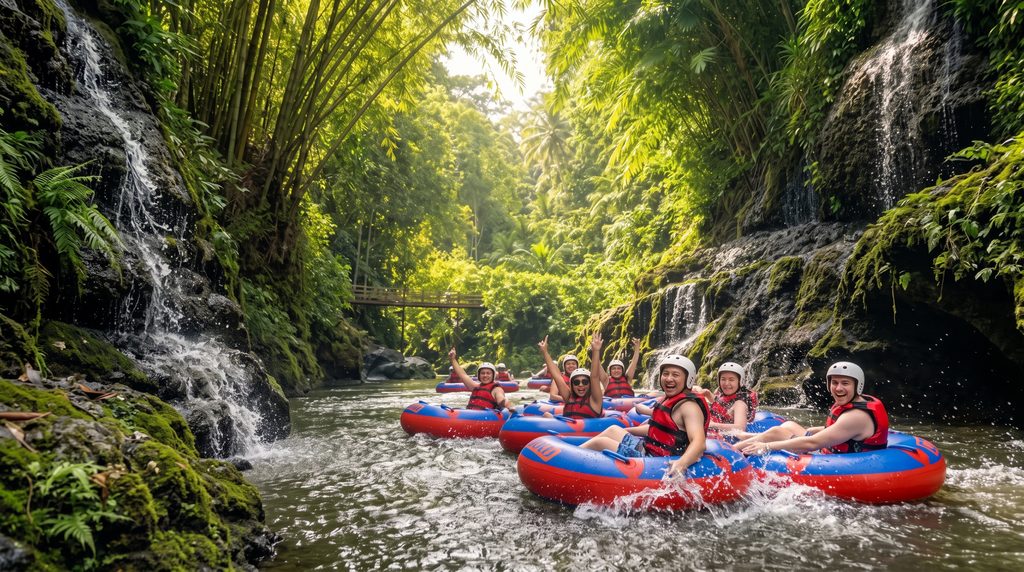
Bali’s rivers are more than scenic waterways. They support the island’s Subak irrigation system, sacred water traditions, agriculture, and a growing range of outdoor experiences.
From white-water rafting on the Ayung River and Telaga Waja River to gentle tubing on the Pakerisan River, there are river activities for different ages and adventure levels.
Quick Facts
| Category | Best Option |
| Longest river | Ayung River |
| Best for beginners | Ayung River |
| Best for thrill-seekers | Telaga Waja River |
| Best for families | Pakerisan River |
| Best season | April–October |
| Popular activities | Rafting, tubing, kayaking, trekking |
| Typical rafting cost | IDR 250,000–450,000 |
Why Rivers Are Important in Bali
Bali’s rivers connect the island’s mountains, forests, rice terraces, villages, temples, and coastline.
Culture & Spirituality
Water has an important role in Balinese Hinduism. Sacred rivers and springs are connected to Tirta, or holy water, and are used for purification rituals and religious ceremonies.
Subak Irrigation
Rivers provide water for Bali’s traditional Subak irrigation system, which supports rice farming and reflects the Balinese philosophy of Tri Hita Karana.
Adventure Tourism
Today, rivers are also popular for outdoor activities such as rafting, tubing, kayaking, canyoning, and eco-trekking.
1. Ayung River
Best for: Beginners, families, rafting and scenery
Difficulty: Class II–III
Location: Ubud and surrounding areas
The Ayung River is Bali’s most popular rafting destination and one of the island’s longest rivers. Its route passes through tropical forests, river valleys, waterfalls, rice terraces, and dramatic canyon walls.
Highlights
- Class II–III rapids suitable for beginners
- Jungle and canyon scenery
- Ancient stone carvings along parts of the river
- Several rafting operators around Ubud
- Half-day and full-day tours available
Typical cost: IDR 250,000–550,000 depending on the package.
Good to know: Some routes require a long descent into the canyon, followed by steep stairs at the end.
2. Telaga Waja River
Best for: Thrill-seekers and experienced rafters
Difficulty: Class III–IV
Location: Karangasem, East Bali
The Telaga Waja River offers a more adventurous rafting experience through East Bali’s mountain landscape. The river is known for stronger rapids, longer rafting routes, and views toward Mount Agung.
Highlights
- More challenging white-water sections
- Mountain and jungle scenery
- Long rafting routes
- Exciting drops and fast-moving water
- Less urban scenery than Ayung
Typical cost: IDR 300,000–450,000.
Always check current river conditions with your operator, particularly during the rainy season.
3. Pakerisan River
Best for: Families, culture and gentle water activities
Difficulty: Class I–II
Location: Tampaksiring and Ubud
The Pakerisan River offers a quieter experience combining nature and Balinese heritage. The river passes through areas associated with temples, rice terraces, and traditional villages.
Highlights
- Gentle water suitable for tubing
- Cultural and agricultural landscapes
- Close to important sites such as Tirta Empul
- Suitable for combining outdoor activities with cultural visits
Typical tubing cost: IDR 150,000–250,000.
This is a good option if you want a river experience without the intensity of white-water rafting.
4. Melangit River
Best for: Adventurous travelers and smaller groups
Difficulty: Class II–III
Location: Klungkung
The Melangit River provides a quieter rafting experience compared with Bali’s better-known rivers. Its narrow river sections, jungle scenery, and local villages make it attractive to travelers looking for something less commercial.
Highlights
- Smaller crowds
- Jungle and canyon scenery
- Technical sections
- Local village atmosphere
- Suitable for adventurous groups
Typical cost: IDR 350,000–450,000.
5. Tukad Balian River
Best for: Nature lovers, trekking and birdwatching
Location: Tabanan and West Bali
Tukad Balian is less associated with rafting and more interesting for its natural landscape and river-mouth environment.
Activities
- River and coastal walks
- Birdwatching
- Nature photography
- Exploring the river mouth
- Local eco-tourism experiences
It is a better choice for travelers looking for a slower nature experience rather than adrenaline activities.
6. Sungi River
Best for: Rural tourism and Subak experiences
Location: Central Bali and Tabanan
The Sungi River plays an important role in Bali’s agricultural landscape. Rather than rafting, visitors can explore surrounding rice fields, villages, and traditional irrigation systems.
Activities
- Rice-field walks
- Village tours
- Farm experiences
- Subak education
- Traditional agricultural activities
For travelers interested in everyday Balinese life, this type of experience can offer a different perspective beyond beaches and temples.
7. Small Rivers & Tributaries
Bali also has numerous smaller waterways and tributaries that support villages, rice fields, forests, and local ecosystems.
These lesser-known waterways can be interesting for:
- Nature photography
- Waterfalls
- Jungle exploration
- Local cultural experiences
- Off-the-beaten-path walks
Because many are not established tourist destinations, it is best to explore them with a local guide.
Bali River Activities at a Glance
| River | Difficulty | Best For | Typical Cost |
| Ayung | II–III | Beginners & families | IDR 250K–550K |
| Telaga Waja | III–IV | Adventure & rafting | IDR 300K–450K |
| Pakerisan | I–II | Tubing & culture | IDR 150K–400K |
| Melangit | II–III | Smaller groups | IDR 350K–450K |
| Tukad Balian | — | Nature & trekking | IDR 200K–300K |
| Sungi | — | Subak & rural tourism | IDR 150K–600K |
Prices and inclusions can vary by operator and season.
Best Time for River Activities in Bali
April to October is generally the easiest period for outdoor river activities, with drier weather and more predictable conditions.
During November to March, rainfall can increase river levels and make rapids stronger. Some activities may be cancelled when conditions are unsafe.
Always follow the operator’s weather and safety recommendations rather than choosing a trip based only on the season.
What to Bring
For rafting, tubing, or river trekking, pack:
- Quick-dry clothing or swimwear
- Secure water shoes
- Waterproof phone case or dry bag
- Sunscreen
- Change of clothes
- Towel
- Personal medication
- Reusable water bottle
Avoid loose items that can easily fall into the river.
River Safety Tips
Before booking a river adventure in Bali:
- Choose an established operator with trained guides.
- Make sure helmets and life jackets fit correctly.
- Follow the safety briefing.
- Check whether transportation and insurance are included.
- Ask about weather-related cancellation policies.
- Never pressure guides to operate during unsafe conditions.
- Follow age and physical requirements for the activity.
For rafting, your guide’s instructions should always take priority over online recommendations.
Respect Bali’s Sacred Rivers
Some rivers and springs are connected to temples and religious ceremonies. Remember to:
- Avoid stepping on Canang Sari offerings.
- Dress appropriately when visiting temples.
- Ask before photographing ceremonies or local people.
- Keep away from restricted sacred areas.
- Never leave rubbish in or around the river.
- Follow local temple rules.
River tourism is more enjoyable when the natural and cultural environment is treated with respect.
Frequently Asked Questions
What is the best river for rafting in Bali?
The Ayung River is a popular choice for beginners and families, while Telaga Waja offers more challenging rafting. Melangit is another option for travelers looking for a quieter rafting experience.
Where can you go river tubing in Bali?
The Pakerisan River is a good option for gentle tubing and can be combined with visits to nearby cultural attractions.
How much does rafting cost in Bali?
Rafting commonly costs around IDR 250,000–550,000 per person, depending on the river, tour duration, operator, transportation, and inclusions.
When is the best time for rafting in Bali?
April to October is generally the most predictable period. During the wet season, river conditions can change quickly, so always check with your operator before departure.
Are Bali rivers suitable for families?
Yes, depending on the activity. The Ayung River offers relatively manageable rafting routes, while the Pakerisan River is better suited to families looking for gentler water activities.
Final Thoughts
Bali’s rivers offer much more than white-water rafting. The Ayung River combines adventure with dramatic scenery, Telaga Waja provides more challenging rapids, while Pakerisan connects gentle outdoor activities with Bali’s cultural heritage.
Whether you want an adrenaline-filled rafting trip, a peaceful tubing experience, or a closer look at Bali’s traditional agricultural landscapes, exploring the island’s rivers is a unique way to experience Bali beyond its beaches.