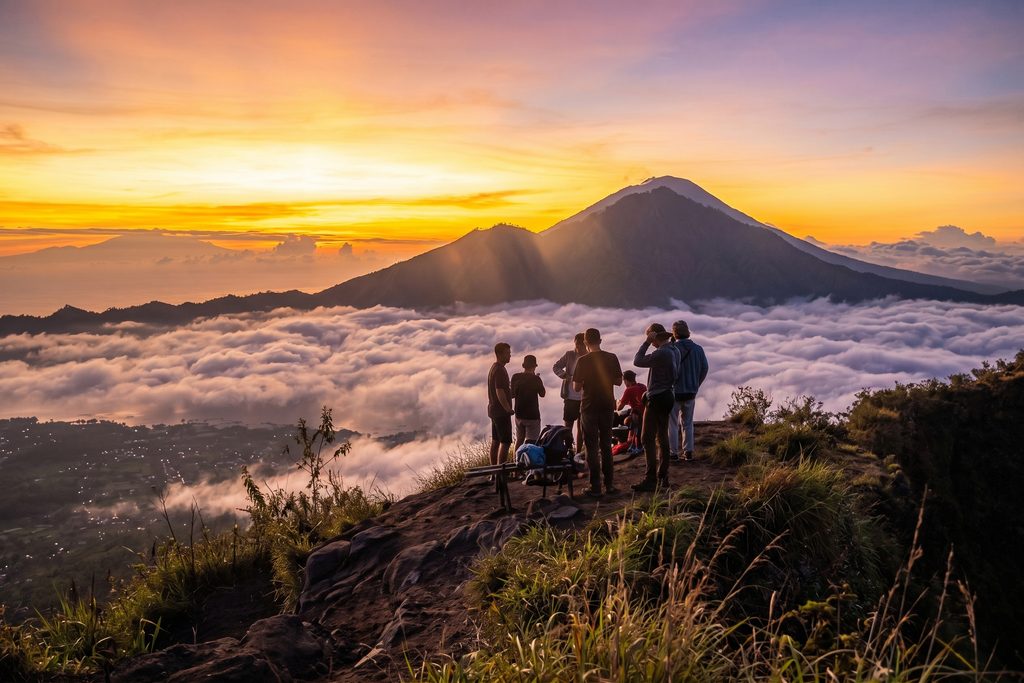
Bali is famous for its beaches and rice terraces, but its mountains offer some of the island’s most spectacular landscapes. From sunrise hikes and volcanic calderas to sacred temples and misty rainforests, Bali’s mountains offer unforgettable experiences for hikers and nature lovers.
Whether you’re looking for the best mountain in Bali for sunrise, a challenging climb, or a peaceful rainforest trek, here are 9 peaks worth exploring.
1. Mount Agung
Best for: Experienced hikers and spiritual journeys
Height: 3,142 m
Difficulty: Very challenging
Duration: 8–12 hours
Mount Agung is the highest mountain in Bali and the island’s most sacred peak. It is closely connected to Balinese Hinduism and is home to important temples, including Pura Besakih.
The climb is steep and demanding, with routes from Pura Pasar Agung and Besakih. Experienced hikers can be rewarded with incredible sunrise views across Bali.
Tip: Conditions and access can change because Mount Agung is an active volcano. Always check official conditions and use a qualified local guide.
2. Mount Batukaru
Best for: Rainforest hiking and solitude
Height: 2,276 m
Difficulty: Challenging
Duration: 3–5 hours
Mount Batukaru is Bali’s second-highest peak and a quieter alternative to Mount Batur. The trail passes through dense rainforest, moss-covered trees, and lush vegetation.
Nearby Pura Luhur Batukaru adds a strong spiritual element to the experience.
Best season: April–September.
3. Mount Batur
Best for: Beginner hikers and sunrise
Height: 1,717 m
Difficulty: Easy to moderate
Duration: 1.5–2 hours to the summit
Mount Batur is one of the most popular mountains in Bali for hiking, especially for sunrise. The relatively short climb leads to panoramic views of Lake Batur, the surrounding caldera, and Mount Agung.
After hiking, you can explore the black lava fields, visit nearby hot springs, or enjoy cafés around Kintamani.
4. Mount Abang
Best for: Quieter alternative to Mount Batur
Height: 2,151 m
Difficulty: Moderate to challenging
Duration: Around 3–4 hours up
Mount Abang forms part of the Batur Caldera and offers beautiful views over Lake Batur and Mount Agung.
The trail passes through shaded forest and can be steep in places, making it a good option for hikers wanting a more peaceful experience.
5. Mount Catur
Best for: Sacred temples and highland scenery
Height: 2,096 m
Difficulty: Moderate
Duration: 3–5 hours
Located near Bedugul, Mount Catur is known for Pura Puncak Mangu, a sacred mountain temple. The forested trail offers cool temperatures and views toward Lake Bratan and Lake Buyan.
6. Mount Sanghyang
Best for: Remote rainforest trekking
Height: Around 2,074–2,087 m
Difficulty: Strenuous
Duration: 4.5–5.5 hours
Mount Sanghyang is a quieter mountain in the Bedugul area, known for its twin peaks and dense rainforest.
The trail can be overgrown and remote, so a local guide is recommended.
7. Mount Pohen
Best for: Misty forest adventures
Height: Around 2,063–2,069 m
Difficulty: Challenging
Mount Pohen is surrounded by lush rainforest in the Bedugul highlands. Expect slippery, root-covered trails and frequent mist, particularly during the wetter months.
It can also be combined with a trek around Mount Tapak.
8. Mount Lesung
Best for: Jungle trekking and nature
Height: 1,865 m
Difficulty: Easy to moderate
Duration: 4–5 hours
Mount Lesung sits south of Lake Tamblingan and offers a quieter hiking experience surrounded by dense forest.
The mountain is also home to sacred sites, including Pura Naga Loka. Consider combining the hike with a traditional canoe trip on Lake Tamblingan.
9. Mount Adeng
Best for: Forest lovers and birdwatching
Height: 1,826 m
Difficulty: Moderate to challenging
Part of the ancient Bedugul volcanic landscape, Mount Adeng is covered in cool, misty forest. The area is particularly attractive to nature lovers and birdwatchers.
Highlights: Moss-covered trees, orchids, wildlife, and Pura Pucak Adeng.
Best Mountains in Bali by Experience
| Experience | Best Mountain |
| Highest mountain | Mount Agung |
| Sunrise hike | Mount Batur |
| Most challenging | Mount Agung |
| Rainforest trekking | Mount Batukaru |
| Quiet hiking | Mount Abang |
| Sacred mountain experience | Mount Agung |
| Highland scenery | Mount Catur |
| Remote trekking | Mount Sanghyang |
| Nature & birdwatching | Mount Adeng |
Tips for Hiking in Bali
Choose the Dry Season
April–October generally offers better trekking conditions, while November–March can bring heavier rain, slippery trails, and reduced visibility.
Dress in Layers
Early-morning temperatures can be surprisingly cold. Bring a warm layer, rain jacket, comfortable hiking shoes, and sun protection.
Bring the Essentials
- Headlamp for sunrise hikes
- 1.5–2 liters of water
- Snacks
- Sunscreen and sunglasses
- Rain jacket
- First-aid supplies
- Power bank
- Small bag for your rubbish
Hire a Local Guide
A local guide can help with navigation, changing trail conditions, safety, and understanding the cultural significance of temples and sacred sites.
Respect Bali’s Sacred Mountains
Many of Bali’s mountains are considered sacred in Balinese Hindu culture. When hiking, respect temples, shrines, offerings, and local religious ceremonies.
Dress appropriately, avoid disturbing offerings, keep noise low around sacred areas, and always follow local instructions.
Final Thoughts
The best mountains in Bali offer much more than beautiful views. Mount Batur delivers an iconic sunrise, Mount Agung provides a challenging spiritual journey, while Batukaru, Lesung, and the Bedugul peaks offer peaceful rainforest adventures.
Before your hike, always check current trail access, weather, volcanic conditions, and local regulations. With proper preparation and respect for Bali’s natural and spiritual landscape, a mountain trek can become one of the highlights of your Bali trip.