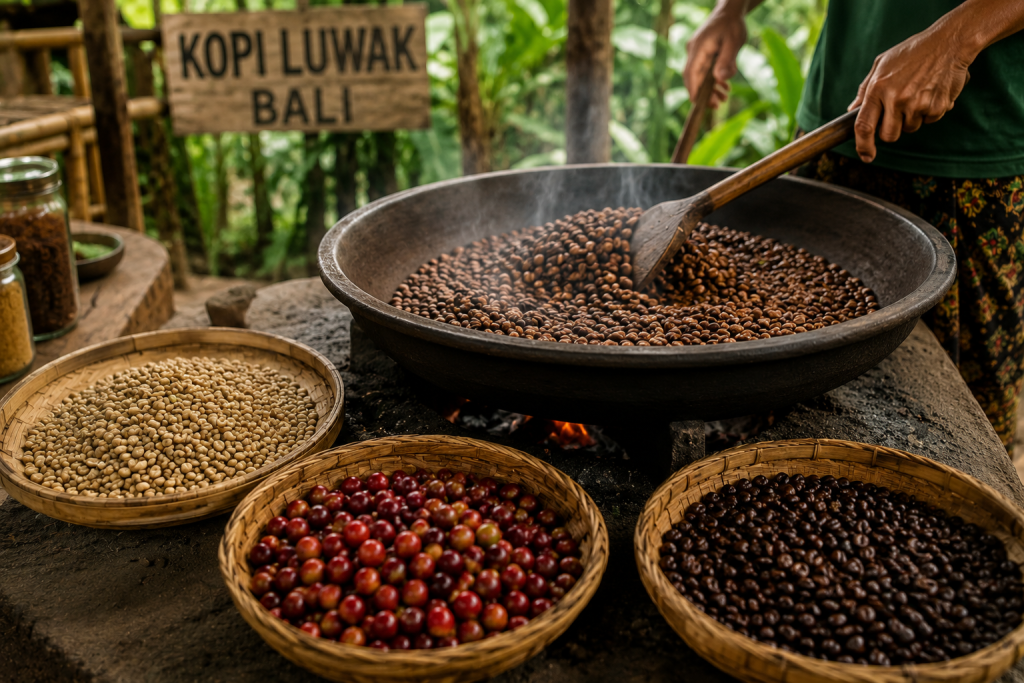
Bali is famous for its breathtaking landscapes, rich culture, and vibrant café scene. Beyond its world-class coffee shops, the island is also home to one of the world’s most unique and luxurious coffees—Kopi Luwak, also known as Civet Coffee.
Produced through an extraordinary natural process involving the Asian palm civet, Kopi Luwak has earned international recognition for its remarkably smooth taste, low acidity, and complex flavor profile. Today, visitors can experience this iconic Indonesian coffee firsthand by visiting Bali’s scenic coffee plantations, where education, nature, and tasting experiences come together in one unforgettable journey.
What Is Kopi Luwak?
Kopi Luwak is a specialty coffee made from beans that have been naturally selected, eaten, partially digested, and excreted by the Asian palm civet (Paradoxurus hermaphroditus).
Native to Indonesia, this nocturnal mammal instinctively chooses only the ripest and sweetest coffee cherries found in the forest. While the fruit is digested, the coffee bean itself remains intact.
As the beans pass through the civet’s digestive system, natural enzymes break down proteins that typically contribute to bitterness. After being collected, the beans are thoroughly cleaned, sun-dried, roasted, and carefully brewed into one of the world’s most sought-after coffees.
From Forest to Cup: The Journey of Kopi Luwak
The production of Kopi Luwak is unlike any other coffee in the world.
1. Natural Selection
Wild Asian palm civets forage at night, selecting only the highest-quality ripe coffee cherries.
2. Natural Fermentation
Inside the civet’s digestive tract, natural enzymes ferment the coffee beans, creating a smoother and more refined flavor.
3. Collection & Cleaning
The beans are carefully collected, thoroughly washed, and hygienically processed to ensure quality and safety.
4. Sun Drying
After cleaning, the beans are naturally dried under the tropical Indonesian sun.
5. Roasting
Master roasters carefully roast the beans to preserve their unique aroma and flavor characteristics.
6. Brewing
The roasted beans are ground and brewed using manual methods that highlight Kopi Luwak’s exceptional complexity.
What Does Kopi Luwak Taste Like?
One of the reasons Kopi Luwak commands such prestige is its distinctive flavor profile.
Exceptionally Smooth
Natural fermentation reduces bitterness, producing an incredibly mellow and velvety cup.
Rich & Full-Bodied
Expect earthy notes complemented by hints of:
- Chocolate
- Caramel
- Brown sugar
- Toasted nuts
- Mild spices
Low Acidity
Kopi Luwak is known for being gentle on the stomach, making it an excellent choice for coffee lovers who prefer less acidic brews.
Best Kopi Luwak Plantations in Bali
Bali’s highland regions, particularly Kintamani and Tegallalang, produce some of Indonesia’s finest Arabica coffee.
These cooler mountain climates provide ideal growing conditions while offering visitors spectacular views of forests, rice terraces, and volcanic landscapes.
1. Alas Harum Bali (Tegallalang)
One of Bali’s most famous agritourism destinations, Alas Harum combines coffee education with stunning panoramic rice terrace views.
Highlights include:
- Traditional roasting demonstrations
- Kopi Luwak education
- Coffee and tea tasting flights
- Scenic viewpoints
- Instagram-worthy attractions
2. Bali Pulina (Tegallalang)
Bali Pulina offers visitors the opportunity to witness every stage of Kopi Luwak production.
Guests can:
- Observe civets
- Learn traditional processing methods
- Sample various Balinese coffees
- Enjoy tasting decks overlooking lush jungle scenery
3. Wanagiri Coffee Plantation (Buleleng)
Located in North Bali, Wanagiri introduces visitors to sustainable coffee production while explaining the differences between:
- Wild-foraged Kopi Luwak
- Ethically farmed Kopi Luwak
The plantation emphasizes responsible coffee cultivation alongside immersive tasting experiences.
4. Teba Sari Agrotourism (Gianyar)
Surrounded by tropical gardens, Teba Sari provides a peaceful setting to explore Bali’s coffee heritage.
Visitors enjoy:
- Plantation tours
- Traditional roasting techniques
- Modern coffee processing insights
- Complimentary coffee tastings
5. D’Garden Luwak Coffee (Bedugul)
Nestled in Bali’s cool mountain region, D’Garden offers an educational experience focused on traditional Kopi Luwak production while showcasing local Balinese coffee varieties.
How to Enjoy Kopi Luwak Like a Coffee Expert
Because Kopi Luwak has such delicate flavor characteristics, proper brewing and tasting techniques make a significant difference.
Choose Manual Brewing
Manual brewing methods preserve the coffee’s subtle aromas far better than espresso machines.
Recommended methods include:
- V60 Pour Over
- French Press
- Chemex
- AeroPress
These brewing techniques allow greater control over extraction while highlighting the coffee’s natural sweetness.
Use the Right Water Temperature
Avoid pouring boiling water directly onto the grounds.
The ideal brewing temperature is:
90°C–96°C
Allow freshly boiled water to rest for approximately 30 seconds before brewing.
Skip Heavy Sugar and Cream
The smooth, naturally sweet profile of Kopi Luwak deserves to be enjoyed on its own.
If desired, add only:
- A drizzle of pure honey
- A small amount of palm sugar
These additions complement rather than overpower the coffee.
Pair with Light Snacks
Choose foods that enhance—not compete with—the coffee’s nuanced flavors.
Excellent pairings include:
- Dark chocolate
- Butter cookies
- Sponge cake
- Plain croissants
- Cream cheese bagels
Ethical Considerations When Choosing Kopi Luwak
As Kopi Luwak has grown in popularity, ethical sourcing has become increasingly important.
When visiting plantations, look for operators that prioritize:
- Responsible animal welfare
- Sustainable farming practices
- Educational experiences
- Transparent production methods
Supporting ethical producers helps preserve Bali’s coffee heritage while promoting better standards for both wildlife and local communities.
Why Visit a Kopi Luwak Plantation in Bali?
A visit to a Balinese coffee plantation offers much more than a cup of coffee.
You’ll experience:
- Beautiful tropical landscapes
- Traditional coffee cultivation
- Local Balinese hospitality
- Guided educational tours
- Coffee roasting demonstrations
- Tastings of multiple Indonesian coffee varieties
- Insight into one of the world’s most unique coffee traditions
Whether you’re a passionate coffee enthusiast or simply curious about Indonesia’s famous specialty coffee, a plantation tour provides an unforgettable cultural experience.
Final Thoughts
Kopi Luwak is more than one of the world’s rarest coffees—it’s a fascinating expression of Indonesia’s rich coffee heritage, natural biodiversity, and centuries-old agricultural traditions.
From watching the coffee’s remarkable journey at scenic plantations in Tegallalang and Kintamani to savoring its exceptionally smooth, chocolatey flavor, every cup tells a story unlike any other.
For travelers seeking authentic Balinese experiences beyond beaches and temples, exploring a Kopi Luwak plantation offers the perfect blend of culture, nature, education, and world-class coffee.