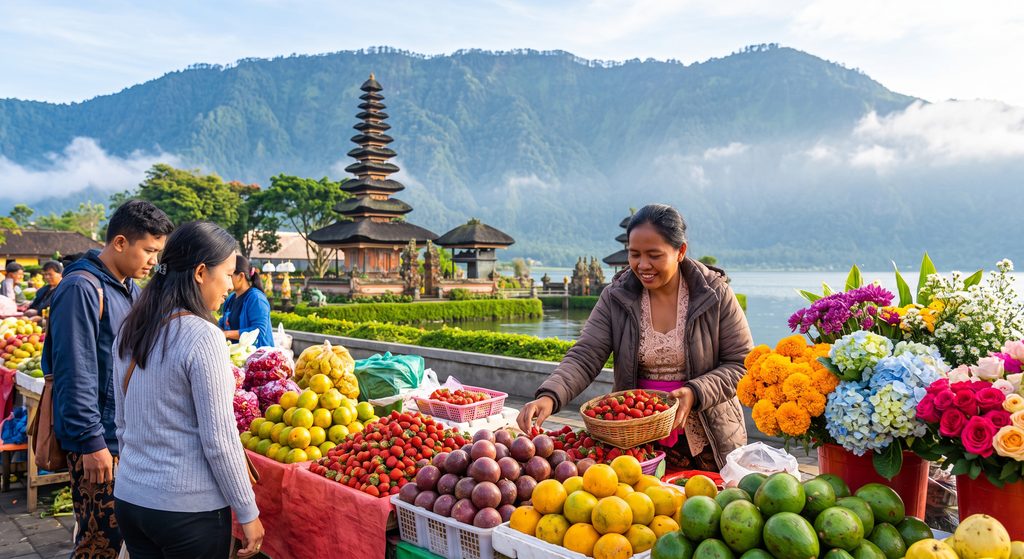
Visiting a traditional market is one of the best ways to experience everyday Bali. From fresh produce and authentic street food to handmade crafts, textiles, and affordable souvenirs, Bali’s local markets offer a glimpse into the island’s culture and community.
Whether you’re looking for cheap souvenirs in Ubud and Gianyar, traditional Balinese handicrafts, or authentic local food, these markets are worth exploring.
Why Are Traditional Markets Important in Bali?
Traditional markets, or pasar tradisional, are an important part of daily Balinese life. Locals visit them to buy fresh produce, spices, meat, flowers, household goods, and items used for Hindu offerings such as canang sari.
Markets also function as social spaces where local vendors, artisans, and communities come together. For travelers, they offer a more authentic shopping experience than modern malls or tourist boutiques.
17 Best Local Markets in Bali
Denpasar Markets
1. Pasar Badung
Best for: Fresh produce, traditional goods, textiles, and local food
Located in central Denpasar, Pasar Badung is one of Bali’s largest traditional markets. The multi-level market sells everything from fresh food and spices to textiles, handicrafts, and ceremonial items.
Location: Jl. Gajah Mada / Jl. Sulawesi, Denpasar
Hours: Open daily; different sections operate at different times
What to buy:
- Fresh fruits and vegetables
- Balinese textiles and batik
- Traditional crafts
- Ceremonial supplies
- Local snacks and street food
Tip: Visit around 5:00–8:00 AM for fresh produce or in the evening for local food.
2. Pasar Kumbasari
Best for: Handicrafts, textiles, art, and souvenirs
Connected to Pasar Badung by a pedestrian bridge, Kumbasari is a popular destination for traditional Balinese crafts and wholesale-style shopping.
Location: Jl. Gajah Mada, Denpasar
Hours: Generally around 8:00 AM–6:00 PM
Look for:
- Wood carvings
- Batik and woven textiles
- Ata bags
- Paintings
- Silver jewelry
- Ceremonial items
Bargaining is common, particularly when buying multiple items.
3. Pasar Cokroaminoto
Best for: Local groceries and traditional street food
Located in North Denpasar, this market has a strongly local atmosphere and becomes particularly lively in the late afternoon.
What to find:
- Fresh produce and spices
- Meat and seafood
- Jajanan pasar
- Srombotan
- Tipat cantok
- Traditional desserts
Best time: Around 4:00–9:00 PM for the street-food atmosphere.
4. Pasar Kreneng
Best for: Night food, local shopping, and everyday goods
Pasar Kreneng combines a traditional daytime market with a lively evening market.
During the day, you’ll find fresh produce, spices, meat, and ceremonial supplies. In the evening, the area becomes busier with food vendors and stalls selling clothing and household items.
Try: Babi guling, nasi campur, satay, bakso, and other Indonesian street food.
Kuta & Legian Markets
5. Kuta Art Market
Best for: Affordable souvenirs and beachwear
Located close to Kuta Beach, Kuta Art Market is a convenient stop for traditional souvenirs and casual beach shopping.
What to buy:
- Sarongs
- Jewelry and accessories
- Wooden crafts
- Beachwear
- Bags and totes
- Keychains
- Bali-themed souvenirs
Bargaining is common. Compare prices at several stalls before buying.
6. Legian Art Market
Best for: Tropical clothing and relaxed souvenir shopping
Located around Jalan Melasti, Legian Art Market offers clothing, beachwear, woven accessories, handicrafts, and souvenirs.
Compared with busier shopping areas in Kuta, the atmosphere can feel more relaxed.
Tip: Visit in the morning for cooler temperatures and fewer crowds.
7. Poppies 1 & 2
Best for: Bargain hunters
The narrow lanes of Poppies 1 and 2 are packed with small shops selling clothing, bags, accessories, artwork, and souvenirs.
Take your time comparing products and prices before negotiating.
8. Garlic Lane
Best for: Souvenirs and casual shopping
Garlic Lane, between Jalan Padma and Jalan Melasti, features a mix of fixed-price and negotiable shops.
You’ll find:
- Bags and totes
- Clothing
- Shoes and sandals
- Sunglasses
- Accessories
- Small souvenirs
Look for fixed-price signs if you’d rather avoid bargaining.
Sanur Market
9. Pasar Sindhu / Sanur Night Market
Best for: Affordable local food
Sanur’s night market is a popular place to sample Indonesian and Balinese dishes in a casual setting.
Popular dishes include:
- Satay
- Nasi goreng
- Nasi campur
- Bakso
- Grilled seafood
- Martabak
- Traditional sweets
Best time: Around 6:00–7:30 PM for the liveliest atmosphere.
Bring cash and small denominations.
Ubud & Gianyar Markets
10. Ubud Art Market
Best for: Balinese crafts and souvenirs
Located opposite Ubud Royal Palace, Ubud Art Market is one of the most convenient places to shop for Balinese handicrafts.
What to buy:
- Rattan bags
- Woven baskets
- Straw hats
- Wood carvings
- Paintings
- Sarongs
- Batik
- Textiles
For a quieter experience, visit in the morning.
11. Pasar Sukawati
Best for: Traditional crafts and affordable souvenirs
Sukawati is one of Bali’s most established markets for traditional art and handicrafts.
You’ll find:
- Sarongs and textiles
- Paintings
- Wood carvings
- Woven bags
- Jewelry
- Decorative items
- Clothing and beachwear
Tip: Go early, especially around 6:00–8:00 AM, and compare prices before purchasing.
12. Tegallalang Market & Handicraft Area
Best for: Handicrafts and local products
Near the famous Tegallalang rice terraces, this area offers a mix of local goods, handicrafts, fresh produce, and decorative items.
It’s a useful stop if you’re already exploring northern Gianyar.
13. Guwang Art Market
Best for: A more relaxed craft-shopping experience
Located near Sukawati, Guwang Art Market offers many similar products, including:
- Sarongs
- Batik clothing
- Wood carvings
- Paintings
- Woven bags and baskets
- Jewelry
- Decorative crafts
It can be a good alternative if you prefer a quieter shopping environment.
Mountain Markets in Bali
14. Candi Kuning Market
Best for: Highland fruit, vegetables, flowers, and plants
Located in the Bedugul highlands, Candi Kuning Market is known for its fresh mountain produce and flowers.
Look for:
- Strawberries
- Avocados
- Passion fruit
- Salak
- Oranges
- Flowers and plants
- Local souvenirs
Combine your visit with Bedugul Botanical Garden or Ulun Danu Beratan Temple.
15. Pancasari Market
Best for: Local produce and everyday goods
Pancasari Market serves the local community along the Denpasar–Singaraja route.
You’ll find fresh highland produce, household goods, cooking supplies, and ceremonial items.
Visit early in the morning for the freshest selection.
Bali Night Markets
16. Gianyar Night Market
Best for: Authentic Balinese street food
Pasar Senggol Gianyar comes alive in the afternoon and evening with local food and everyday goods.
Popular choices include:
- Babi guling
- Nasi jinggo
- Satay
- Klepon
- Bakso
- Traditional snacks
Best time: Around 4:00–8:30 PM.
17. Blambangan Senggol / Kuta Night Market
Best for: Local Indonesian food and seafood
This evening market in Kuta offers casual street-side dining with seafood, grilled dishes, Indonesian specialties, and desserts.
It’s a convenient option for travelers looking to experience a more local side of Kuta after spending time at the beach.
Best Bali Markets by Experience
| Looking for | Markets to consider |
| Traditional market experience | Pasar Badung, Pasar Kreneng |
| Cheap souvenirs | Sukawati, Ubud, Kuta Art Market |
| Balinese handicrafts | Kumbasari, Sukawati, Guwang |
| Textiles & sarongs | Kumbasari, Badung, Sukawati |
| Local street food | Gianyar, Sanur, Kreneng |
| Beachwear | Kuta, Legian, Garlic Lane |
| Highland produce | Candi Kuning, Pancasari |
| Less touristy atmosphere | Cokroaminoto, Pancasari, Guwang |
| Bargain shopping | Sukawati, Kuta, Legian |
How to Bargain at Bali Markets
Bargaining is common at many art and souvenir markets, but it’s not appropriate everywhere.
Bargaining is generally expected at:
- Art markets
- Souvenir stalls
- Craft markets
- Clothing stalls
- Some open-air shops
Prices are usually fixed at:
- Fresh produce stalls
- Grocery vendors
- Street-food stalls
- Clearly marked fixed-price stores
Simple bargaining tips
- Ask for the price politely.
- Compare prices at several stalls.
- Make a reasonable counter-offer.
- Keep the conversation friendly.
- If you can’t agree, simply thank the vendor and walk away.
You may hear about pengasihan, the belief that making the first sale of the day brings good luck. This is one reason some vendors may be particularly open to early-morning customers.
When Is the Best Time to Visit Bali Markets?
| Market type | Recommended time |
| Wet/produce markets | 5:00–8:00 AM |
| Art & souvenir markets | 8:00–10:00 AM |
| Night markets | 6:00–8:00 PM |
Early mornings are generally cooler and less crowded, while evening markets are best for street food and atmosphere.
Bali Market Shopping Tips
Bring Cash
Traditional market vendors often prefer cash, especially smaller denominations such as IDR 10,000–50,000.
Bring a Reusable Bag
A tote bag is useful when buying clothing, food, crafts, or multiple souvenirs.
Wear Comfortable Clothes
Markets can involve a lot of walking. Wear comfortable shoes and breathable clothing.
Watch Your Step
Wet markets can have damp or slippery floors, particularly around fresh seafood and produce sections.
Ask Before Taking Photos
Markets are working environments, so ask permission before photographing vendors or people.
Respect Religious Items
Some markets sell ceremonial goods and Hindu offering materials. Treat these items respectfully.
Frequently Asked Questions
Where can I find cheap souvenirs in Bali?
For traditional souvenirs, consider Ubud Art Market, Sukawati Art Market, Guwang Art Market, and Kuta Art Market. Prices and product quality vary, so comparing several stalls is recommended.
What are the best markets for Balinese handicrafts?
Pasar Kumbasari, Sukawati, Ubud Art Market, and Guwang Art Market offer a wide range of wood carvings, woven products, textiles, paintings, and decorative crafts.
Where can I experience authentic Balinese street food?
Try Gianyar Night Market, Sanur Night Market, Pasar Kreneng, or Blambangan Senggol for casual local food and traditional Indonesian dishes.
Do I need to bargain in Bali markets?
Bargaining is common in art, craft, souvenir, and clothing markets. It is generally not expected at food stalls and many fresh-produce markets.
Should I bring cash?
Yes. Cash in smaller Rupiah denominations is useful because many traditional market vendors don’t accept cards.
What is pengasihan?
Pengasihan refers to the belief that making the first sale of the day brings good fortune. This is one reason early-morning shoppers may sometimes receive more welcoming offers.
Which Bali markets are good for textiles?
Pasar Kumbasari, Pasar Badung, and Sukawati Art Market are useful places to look for traditional textiles, sarongs, batik, and woven products.
What should I buy at a Bali traditional market?
Popular choices include sarongs, woven bags, batik, wood carvings, traditional paintings, handmade jewelry, local snacks, spices, and fresh tropical fruit.
Final Thoughts
Bali’s traditional markets offer much more than souvenirs. They are places to experience local food, craftsmanship, traditions, and everyday community life.
For crafts and souvenirs, explore Ubud, Sukawati, Guwang, Kuta, and Kumbasari. For local food, visit Sanur, Gianyar, Kreneng, or Kuta’s evening markets. And for fresh highland produce, Candi Kuning and Pancasari are excellent stops.
Wherever you go, bring small cash, bargain respectfully, arrive early when possible, and take the time to explore beyond the tourist-facing stalls.